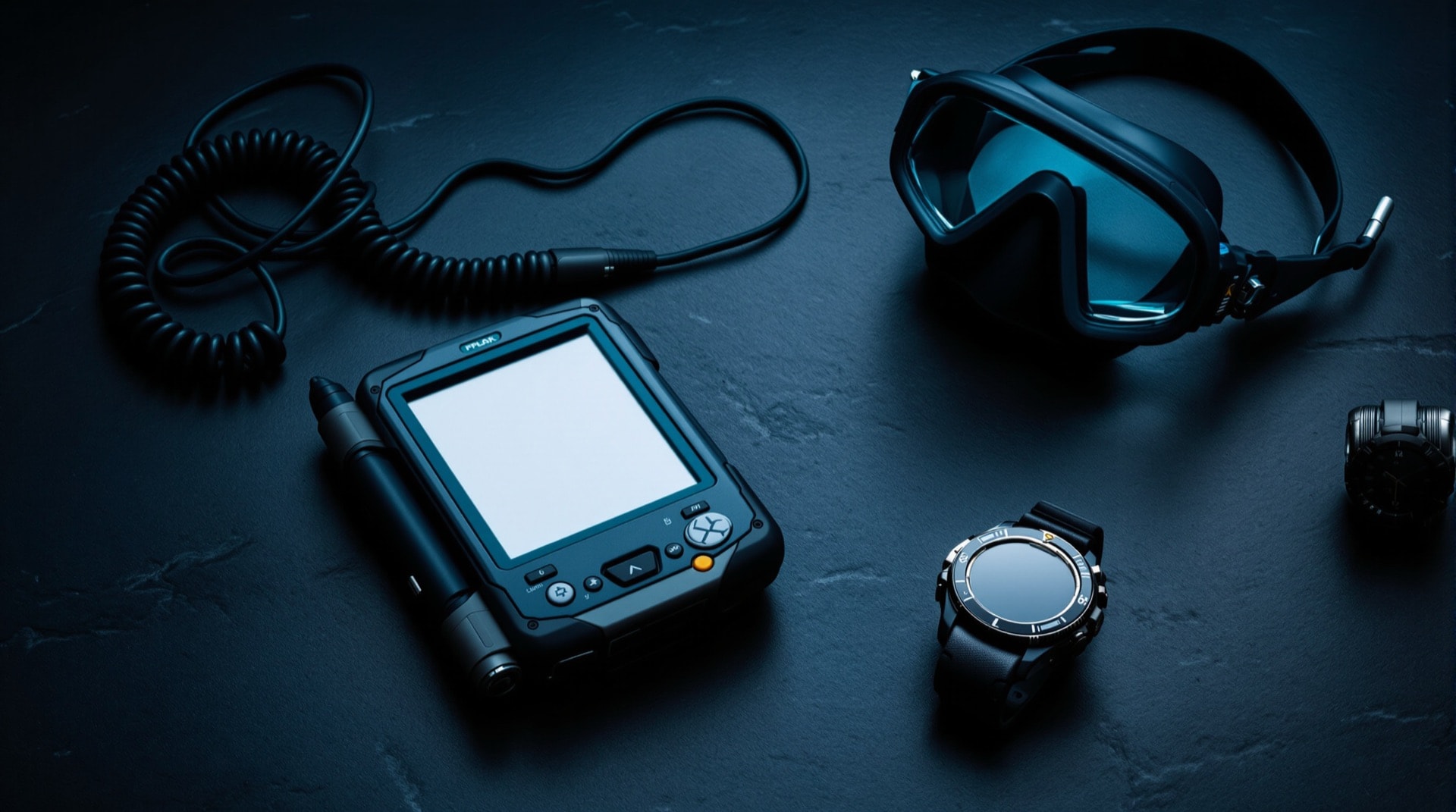
Welcome to the DreamDives product range. Whether you were looking for an all-in-one scuba log for a handheld and a desktop PC, or dive computer import software that worked with the computer you already owned, this page is where the range was laid out.
The range at a glance
- SharkPoint for PocketPC — active version 2.0. The handheld logbook for Windows Mobile devices, sharing the desktop edition's look and feel.
- SharkPoint for Palm — active version 1.5. The Palm OS edition, and the range's original handheld companion.
- SharkPoint for Windows — active version 2.0. The full desktop logbook and the centre of the range.
- SharkPoint DualPack (Palm & Windows) — active version 1.5. Handheld and desktop together with DiveSync.
- SharkPoint DualPack (PocketPC & Windows) — active version 2.0. The version 2 suite with DiveSync Next Gen.
- SharkPoint DCU — dive computer import modules for the Windows edition, published for both the 1.5 and 2.0 generations.
- Scububble — the shared online dive spot database that SharkPoint logbooks could connect to.
How to think about the range
The structure was simpler than the list makes it look. There was one logbook, published for three platforms, plus one transfer layer and one import layer.
The desktop edition is the centre. SharkPoint for Windows held the complete dataset, ran the statistics, designed and printed the paper logbook, and hosted the dive computer imports. If a diver only ever bought one thing, this was it.
The handheld editions are for capture. The point of the Palm and PocketPC editions was to get details down while they were fresh — on the boat, on the beach, before the surface interval was over and the numbers had blurred. They were full logbooks in their own right, not note-takers, but their reason for existing was proximity to the dive.
DiveSync is the join. It moved records in both directions between handheld and desktop, and it is what made the pair behave like one logbook rather than two. The DualPack bundles simply packaged a handheld edition, the desktop edition and DiveSync together.
DCU is the on-ramp for dive computer data. Rather than retyping a profile, the DCU modules read the dive computer's own log files and appended the profiles to the dives already in the logbook.
Version generations, and why they did not always mix
Two generations ran alongside each other. The 1.5 generation covered SharkPoint for Palm and the original Windows release; the 2.0 generation covered SharkPoint for Windows v2, SharkPoint for PocketPC v2 and DiveSync Next Gen.
The database format changed between them, and DiveSync 1.5 could not read the newer format. That is why the Palm DualPack stayed on Windows v1.5: the Palm edition and Windows v2 could not be synchronised. It is a good illustration of the general problem the file formats page deals with — a logbook is only as portable as the format it is stored in.
Availability
None of this software is distributed any more. DreamDives stopped publishing after 2009, and the handheld platforms the range depended on have since been retired by their own vendors. These pages remain as a description of what each edition did. For the parts that are still useful regardless of software, see Support.